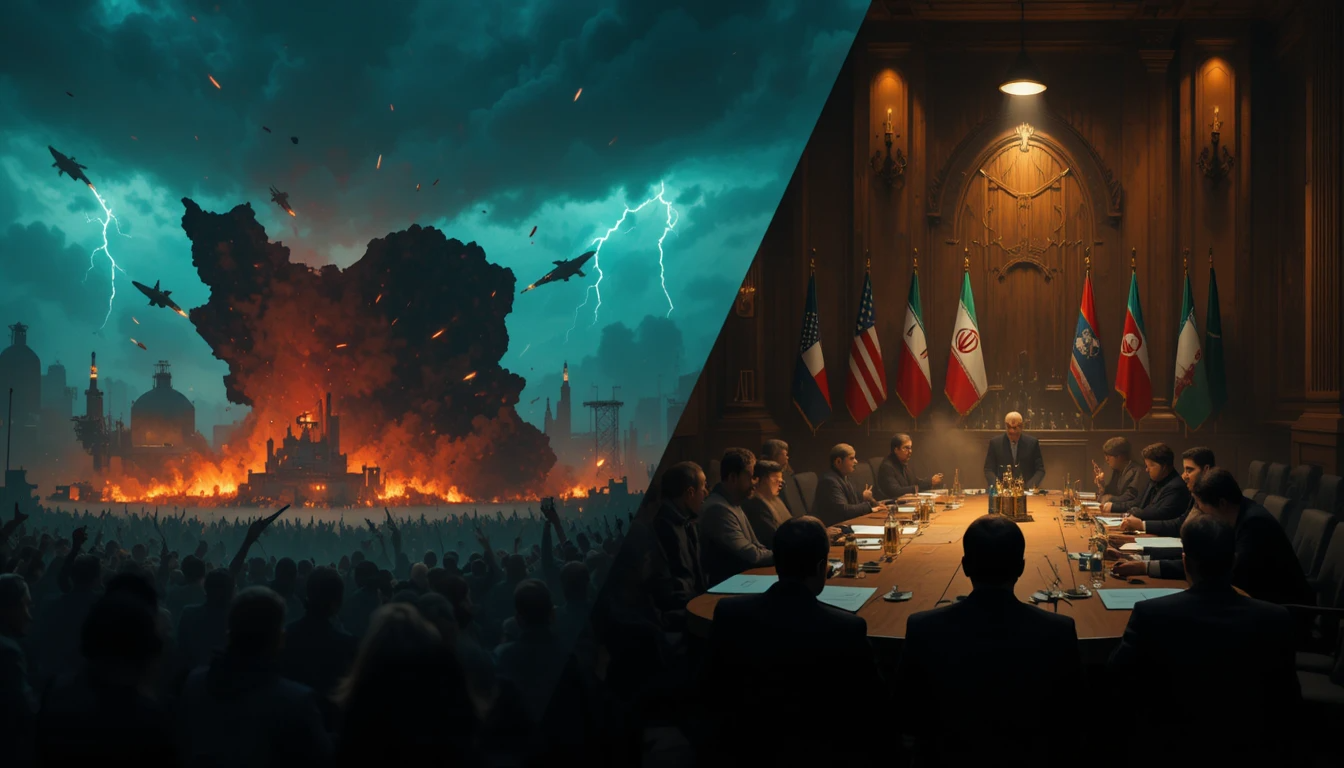
The world woke up to a dramatically different Middle East on March 1, 2026. What began as a “broad wave” of coordinated airstrikes by the United States and Israel on Tehran has rapidly spiraled into a multi-front conflict, drawing in Gulf Arab states and threatening global economic stability. With the confirmed death of Iran’s Supreme Leader, Ayatollah Ali Khamenei, and top Iranian commanders, the region now stands on the precipice of an all-out war that could redraw the geopolitical map of the Middle East for generations .
This article delves into the first 48 hours of this escalating crisis, examining the shocking assassination of Iran’s leadership, the devastating retaliatory strikes across the Gulf, the fragile politics of the affected Arab nations, the global economic shockwaves, and the profound strategic implications of a potentially diminished but dangerously unpredictable Iran.
1. The Assassination and the “Broad Wave”: Decapitation in Tehran
Late Saturday night, the unthinkable happened. In a precision strike that will reverberate through history, a joint US-Israeli operation targeted and killed Ayatollah Ali Khamenei, who had ruled Iran for 36 years . The attack, which also killed his daughter, son-in-law, and several other high-ranking officials, was not an isolated incident but the centerpiece of a massive military campaign dubbed by the IDF as a “broad wave” of attacks in the “heart of Tehran” .
The strikes were extensive, hitting not only political centers in the Pasteur neighborhood—where the offices of the supreme leader and president are located—but also critical military and nuclear infrastructure. Reports confirmed that Iran’s Natanz nuclear enrichment site was targeted again, following similar strikes during the 12-Day War in June 2025 .
Explosions rocked not just Tehran, but also the cities of Karaj, Isfahan, Yazd, and Khuzestan, as US B-2 stealth bombers reportedly struck ballistic missile facilities with 2,000-pound bombs .
The stated justification from Washington, delivered by Defense Secretary Pete Hegseth, was to neutralize Iran’s missile program and dismantle what they described as a conventional shield for “nuclear blackmail ambitions” .
President Trump framed the operation as a continuation of unfinished business, claiming that despite diplomatic efforts following the 12-Day War, Iran had arrogantly refused to abandon its aggressive regional posture .
However, critics were quick to point out the timing: the attacks came just days after what Omani mediators had described as “significant progress” in nuclear talks in Geneva, suggesting that for the US and Israel, the diplomatic off-ramp was never a serious option .
2. Iran’s Retaliation: Drones, Missiles, and the Opening of a “Gate of Fire”
Far from being decapitated, Iran’s retaliatory machinery kicked into high gear within hours. The Islamic Revolutionary Guard Corps (IRGC) vowed revenge, and it was swift and devastating. The strategy was clear: do not just strike back at Israel, but widen the conflict to impose maximum economic and political costs on the US and its regional partners.
Iran launched over 700 drones and hundreds of missiles in a coordinated campaign that targeted what it claimed were 500 US and Israeli sites across the region . This was not a symbolic gesture. It was a calculated military operation designed to spread the war.
In a dramatic escalation, the IRGC announced it had struck three oil tankers belonging to the US and Britain in the Gulf and the Strait of Hormuz . The attack on shipping lanes—through which 20% of the world’s oil passes—was a direct threat to the global economy. The energy war escalated further when Iranian drones targeted Saudi Arabia’s Ras Tanura refinery, one of the world’s largest, temporarily shutting it down and sending plumes of black smoke into the sky . Kuwait’s Ahmadi oil refinery was also hit by debris from intercepted drones, injuring two workers .
On the military front, the IRGC claimed to have rendered the Ali Al Salem Air Base in Kuwait “completely out of service” and destroyed a US THAAD missile defense radar in Al-Ruwais, UAE . In a stunning display of the chaos, three US F-15 fighter jets were mistakenly shot down by Kuwait’s own air defenses, though all crew bailed out safely .
An Iranian strike on the US Embassy compound in Kuwait City added to the mayhem, while pro-Iranian militias in Iraq claimed drone attacks on US troops at Baghdad airport and a US base in Irbil . In perhaps the most dramatic claim, the Iranian Armed Forces stated they had “opened a huge gate of fire” in Israel, targeting government complexes in Tel Aviv and intelligence centers in Haifa .
3. The Arab Gulf States Caught in the Crossfire
For the Gulf Arab states, the past 48 hours have been a nightmare scenario they spent years trying to avoid. Having pursued policies of rapprochement and detente with Iran, countries like the UAE, Saudi Arabia, and Qatar suddenly found themselves on the front lines of a US-Iran war.
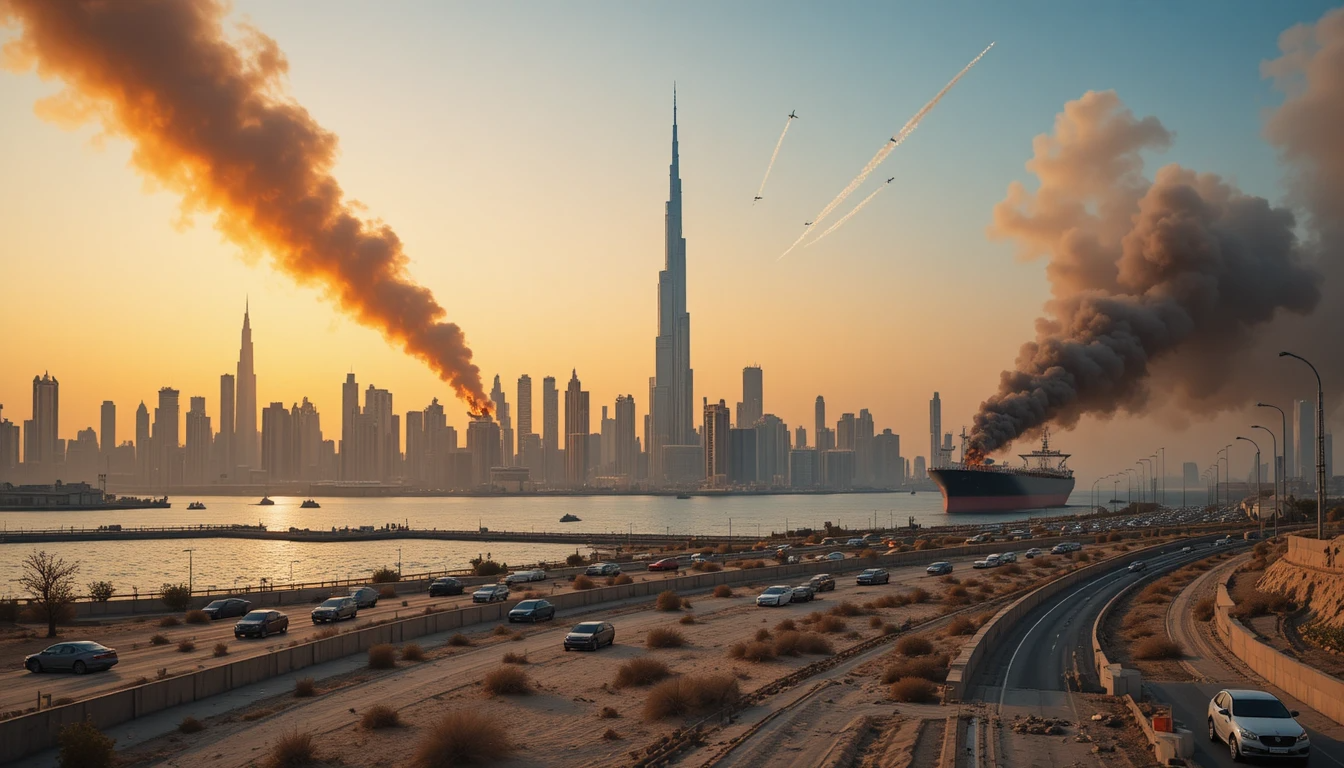
The attacks on their soil have been both physical and political. The UAE was forced to close its airspace and its busiest airports after strikes hit civilian areas. Dubai Airports, a global travel hub, saw flights suspended for three days, only resuming limited services on Monday evening . The UAE’s reaction was swift: it announced the closure of its embassy in Tehran and withdrew its diplomatic mission, a move that signifies a complete breakdown of the carefully cultivated ties of recent years .
The position of these states is precarious. While their defense and intelligence cooperation with the US and Israel has long been an open secret—formalized under the US Central Command (CENTCOM)—they are now exposed as direct targets. Analysts suggest that Iran’s strategy is to squeeze these regimes, forcing them to pressure the US and Israel toward a ceasefire by threatening their economic lifelines: oil and gas exports through the Strait of Hormuz .
Lebanon has also been dragged into the abyss. In an unprecedented move, Hezbollah fired rockets into Israel early Monday, avenging Khamenei’s death . Israel’s response was ferocious, bombarding Beirut’s southern suburbs and villages in southern Lebanon, killing at least 31 people and wounding 149 . This prompted the Lebanese government to take the drastic step of imposing an “immediate ban” on Hezbollah’s military and security activity, a move that risks igniting a civil conflict within Lebanon itself .
4. The Global Impact: Oil Prices, Economic Chaos, and International Reaction
The war’s shockwaves are being felt far beyond the Middle East. The UK gas price spiked dramatically after Qatar announced a halt to LNG production at its massive Ras Laffan facility due to military action, threatening to reignite a cost-of-living crisis . With Brent crude prices poised to potentially hit $100 a barrel, the specter of global inflation has returned with a vengeance .
The international community is scrambling. China and Russia, while not intervening militarily, have moved to politically support Tehran. Chinese Foreign Minister Wang Yi called his Iranian counterpart to express support for Iran defending its sovereignty, urging the US and Israel to immediately cease military operations . Russia’s Vladimir Putin discussed the “unprecedented escalation” with Bahrain’s king and signaled readiness to use “all available means” to stabilize the region .
The US’s European allies—the UK, France, and Germany—issued a joint statement condemning Iran rather than the aggressors, a position that drew criticism for its subservience to US policy . Meanwhile, the UK quietly allowed the US to use its bases in Cyprus for operations, prompting a drone attack on a British base on the island . Pakistan saw violent protests, with 20 people killed as the country’s large Shia population took to the streets in fury .
5. Analysis: A Diminished Iran and the Redrawing of the Region
Even at this early stage, strategic analysts agree that the Middle East has entered a new era. The killing of Khamenei, while not the immediate collapse of the regime, has created a leadership vacuum. An interim leadership council has been formed, but the question of succession is fraught with danger .
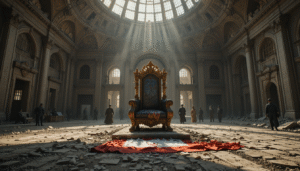
According to experts cited by the CBC, a diminished Iran is now inevitable . This would have transformative effects on the region. The so-called “Axis of Resistance”—encompassing Hezbollah, Hamas, and Shiite militias in Iraq—has already been degraded by previous conflicts and this new war weakens its central pillar further .
For Israel, the neutralization of its biggest regional foe and the threat of a nuclear Iran is a significant strategic victory. For the Gulf states, it may force a permanent realignment away from Tehran and deeper into the arms of Washington and Jerusalem, potentially accelerating normalization efforts .
However, a wounded Iran is a dangerous Iran. As the IRGC has demonstrated, it retains the capacity to project power asymmetrically, targeting energy infrastructure and shipping lanes. The internal dynamics are equally volatile. While some Iranians may secretly welcome the fall of a repressive leader, the spectacle of foreign bombs killing civilians—including reports of 180 children killed in a girls’ school in Minab—is unlikely to foster gratitude towards the liberators .
The progressive and democratic forces within Iran have historically rejected both the clerical regime and imperialist intervention. Their struggle for a free and democratic Iran has now been overshadowed by a war that threatens to plunge their country into years of chaos and civil conflict .
Conclusion
As the sun sets on the second day of this war, the only certainty is that there is no end in sight. With Israeli military chief Eyal Zamir warning that “many more days of combat lie ahead,” and Iran vowing never to negotiate, the world braces for a long and bloody conflict .
The “New War” is not just another chapter in the Middle East’s long history of violence; it is a potential rewriting of the entire book. Whether it leads to a new, more stable order or simply replaces one set of crises with another depends on how the international community navigates the treacherous waters ahead—and whether the voice of reason can prevail over the thunder of war .