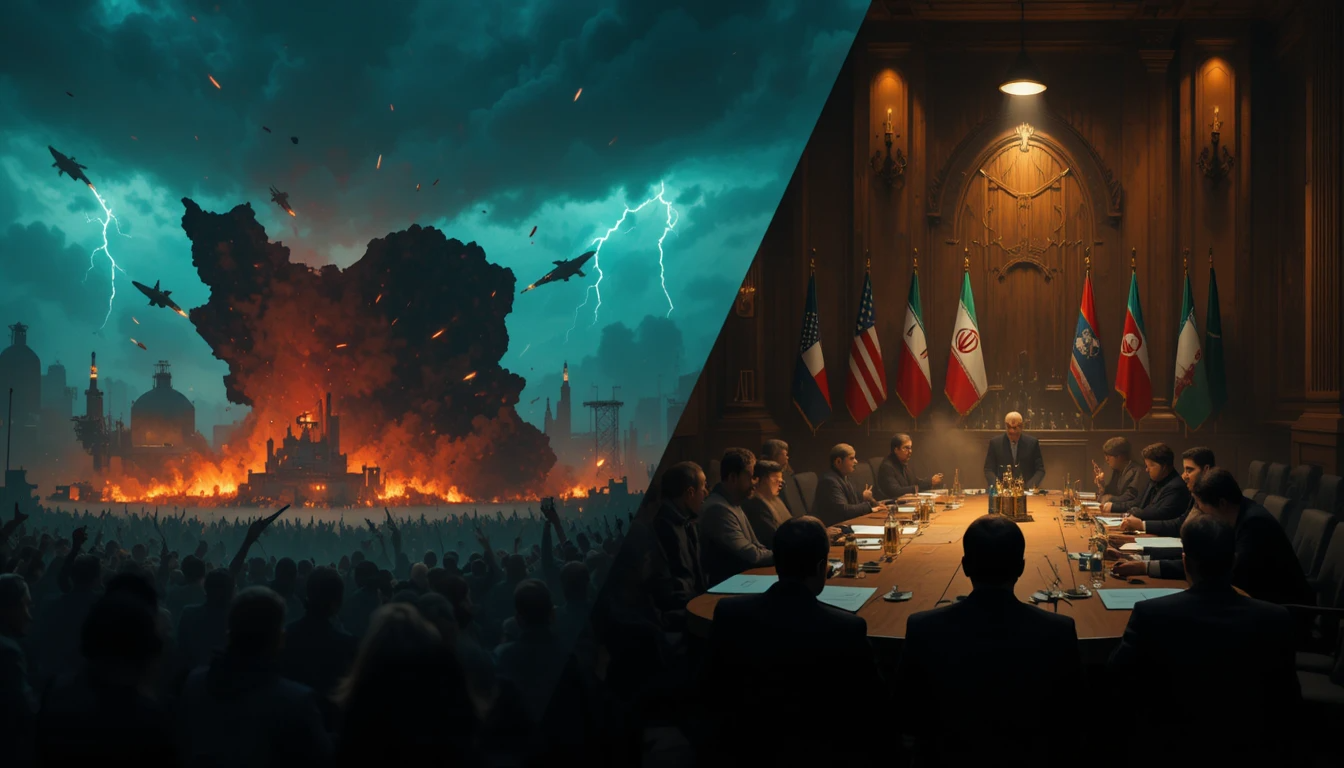
As the world watches the Middle East with bated breath, the Islamic Republic of Iran stands at a critical crossroads on March 1, 2026. The past 48 hours have painted a picture of a nation simultaneously projecting military strength, engaging in high-stakes diplomacy, and grappling with severe internal economic unrest. Conflicting signals are emerging from Tehran: while the Supreme Leader vows defiance against “enemies” both foreign and domestic, the Omani mediator of US-Iran talks suggests a historic breakthrough on the nuclear issue may be within reach . This article delves into the multifaceted crisis facing Iran today, analyzing the military posturing, the potential nuclear deal, the domestic protests, and the global implications of a volatile situation.
Military Posturing: “Actions Will Be Carried Out with Greater Strength”
Just yesterday, on February 28, Iranian state media quoted a military spokesman declaring that “the armed forces will carry out strong actions with greater strength” . This statement, carried by the official新华社 (Xinhua News Agency), serves as a stark reminder that Tehran is prepared for a confrontation should diplomatic efforts fail. The rhetoric is not just for domestic consumption; it is a direct message to the United States and Israel, whose combined military assets are currently massed in the region in what is being described as the largest buildup in decades .
This military saber-rattling is happening against the backdrop of a significant strategic vulnerability. In June 2025, Israel launched a 12-day war against Iran, with the US briefly joining to bomb Iranian nuclear sites . The full extent of the damage remains classified, but it is believed to have significantly set back Iran’s nuclear program and resulted in the death of senior military leaders. In a rare admission of loss, Iranian Foreign Minister Abbas Araghchi recently stated that “Tehran may have lost several of its leaders” in those strikes . This history of direct attacks explains Iran’s current defensive posture and its warnings that any future US strike could trigger a “devastating war” engulfing the entire region .
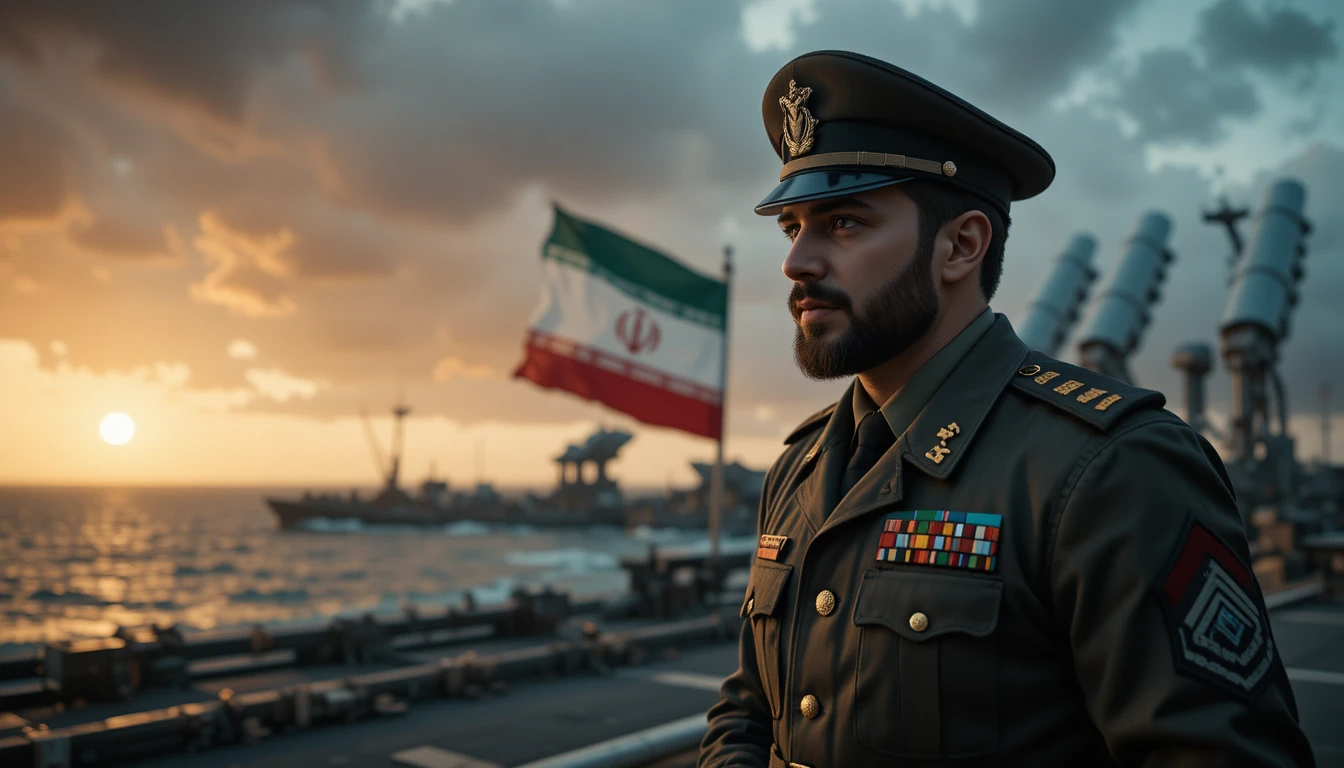
A key flashpoint is the Strait of Hormuz. On February 28, the European Union Naval Mission Force reportedly intercepted a radio transmission from Iran’s Revolutionary Guard Corps (IRGC) warning, “You cannot pass through the Strait of Hormuz” . This narrow waterway is the world’s most critical oil chokepoint, through which 20-30% of the world’s seaborne crude oil passes . Analysts at JPMorgan and other global financial institutions have warned that a blockade or significant military conflict in the strait could send oil prices soaring past $130 per barrel, a catastrophic shock to a still-fragile global economy . This threat transforms a regional dispute into a global economic concern overnight.
The Nuclear Diplomatic Maze: Breakthrough or False Dawn?
While the military drums beat, a frantic diplomatic effort is underway to prevent another war. The past week saw intense, Oman-mediated indirect talks in Geneva between the US and Iran . While those talks concluded without a signed deal, they ended on a surprisingly optimistic note, with an agreement to move to technical-level negotiations in Vienna starting tomorrow, March 2 .
The most stunning development came from the mediator itself. Omani Foreign Minister Sayyad Badr Albusaidi told CBS News that the two sides have reached a conceptual agreement on the core issue of Iran’s enriched uranium stockpile. He described an understanding of “zero accumulation, zero stockpiling, and full verification” of nuclear material . According to Albusaidi, there is agreement that existing stockpiles of uranium enriched up to 60% (just a short step from weapons-grade) will be “down-blended to the lowest level possible and converted into fuel, and that fuel will be irreversible” . If true, this represents a far more stringent restriction than the original 2015 nuclear deal (JCPOA), which allowed for limited enrichment.
However, significant hurdles remain. The U.S. delegation, led by Trump envoy Steve Witkoff, is reportedly demanding a complete dismantlement of key nuclear sites at Fordow and Natanz, and “zero enrichment,” a position that Iran has historically rejected outright . Iran’s lead negotiator, Abbas Araghchi, has been adamant that while Iran will never seek a nuclear weapon, it will never “forgo our right to harness the dividends of peaceful nuclear technology” .
Furthermore, the two sides remain far apart on the issue of sanctions relief. Iran insists on the lifting of all US and UN Security Council sanctions, a non-starter for Washington, which is reportedly offering only “minimal sanctions relief” . The coming technical talks in Vienna, involving the International Atomic Energy Agency (IAEA), will be the true test. The IAEA has urged Iran to cooperate “constructively” and stressed the “utmost urgency” in allowing inspectors to verify the status of its nuclear material, much of which has been out of view since the June 2025 strikes .
Domestic Unrest: The Khamenei Factor and a Crumbling Economy
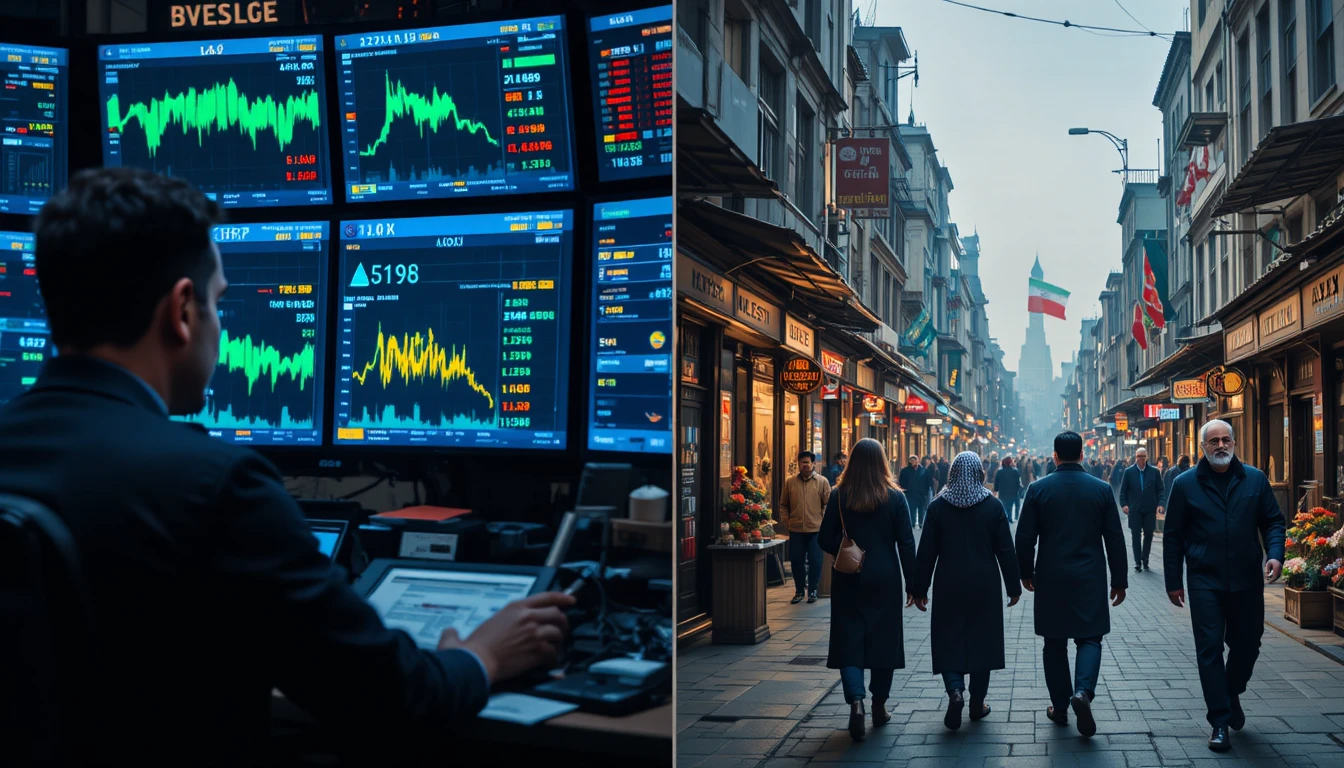
Compounding the external pressures is a severe internal crisis. The Iranian rial is collapsing under the weight of international sanctions, leading to soaring inflation and widespread public anger. Protests have flared across the country since late February, with rights groups reporting that over 10 people have been killed and scores more detained . The demonstrators, including “bazaaris” (market traders), are expressing their inability to do business in the current economic conditions, reflecting a direct threat to the regime’s stability.
In a televised address on February 28, Supreme Leader Ayatollah Ali Khamenei addressed the unrest with a dual message. He acknowledged the legitimacy of the economic grievances, stating, “The bazaaris were right. They are right to say they cannot do business in these conditions” . However, he drew a hard line against the protests themselves, vowing that the Islamic Republic “will not yield to the enemy” and demanding that “rioters should be put in their place” . This firmly shuts the door on any political reforms and signals a security-first approach to the demonstrations.
This domestic fragility weakens Iran’s hand internationally. US President Donald Trump has sought to exploit this, warning that the US is “locked and loaded and ready to go” to support protesters . For the regime in Tehran, the situation is a high-wire act: making enough diplomatic progress to secure sanctions relief to calm the streets, without appearing to “yield” to American pressure and thus emboldening the opposition. The recent string of strategic blows—the weakening of Hezbollah, the ouster of ally Bashar al-Assad in Syria, and the direct strikes on its own soil—has left the leadership feeling uniquely vulnerable .
Global Implications: A World on Edge
The outcome of the current crisis will reverberate far beyond Iran’s borders. For the global economy, the price of oil hangs in the balance. The mere threat of a Hormuz closure has already pushed Brent crude toward $70 a barrel, and any real conflict would have a dramatic impact on energy prices and global markets .
For the Middle East, it presents a nightmare scenario. Iran has warned that it would consider US military bases in the region legitimate targets in the event of an attack, potentially dragging in Gulf Arab states . Araghchi described a potential war as a “very terrible scenario” where “perhaps the whole region would be engaged and be involved” . Israel, Iran’s arch-enemy, remains poised to act unilaterally if it perceives the diplomatic process as a failure.
Conclusion: A Delicate Balance
As Iran steps into March 2026, it is a nation pulled in multiple directions. The Iranian military is promising “stronger actions,” signaling a readiness for conflict . The Supreme Leader is vowing defiance against protesters and foreign enemies alike . Yet, behind the scenes, diplomats appear to be inching closer to a potentially groundbreaking nuclear agreement that would see Iran’s stockpiles eliminated under strict international oversight .
The next 72 hours are critical. Technical talks begin in Vienna on March 2, coinciding with an IAEA Board of Governors meeting where Iran’s nuclear activities will be scrutinized . Simultaneously, President Trump’s informal deadline for a deal is looming, keeping the threat of US military action very real . For now, Iran is holding its breath, balancing on the knife’s edge between a potential diplomatic breakthrough that could revive its economy and a devastating regional war that could reshape the Middle East for a generation. The world waits to see which way the country—and its leaders—will fall.
Knicks vs Mavericks: How to Watch this thriller Live Stream NBA, TV 1
